
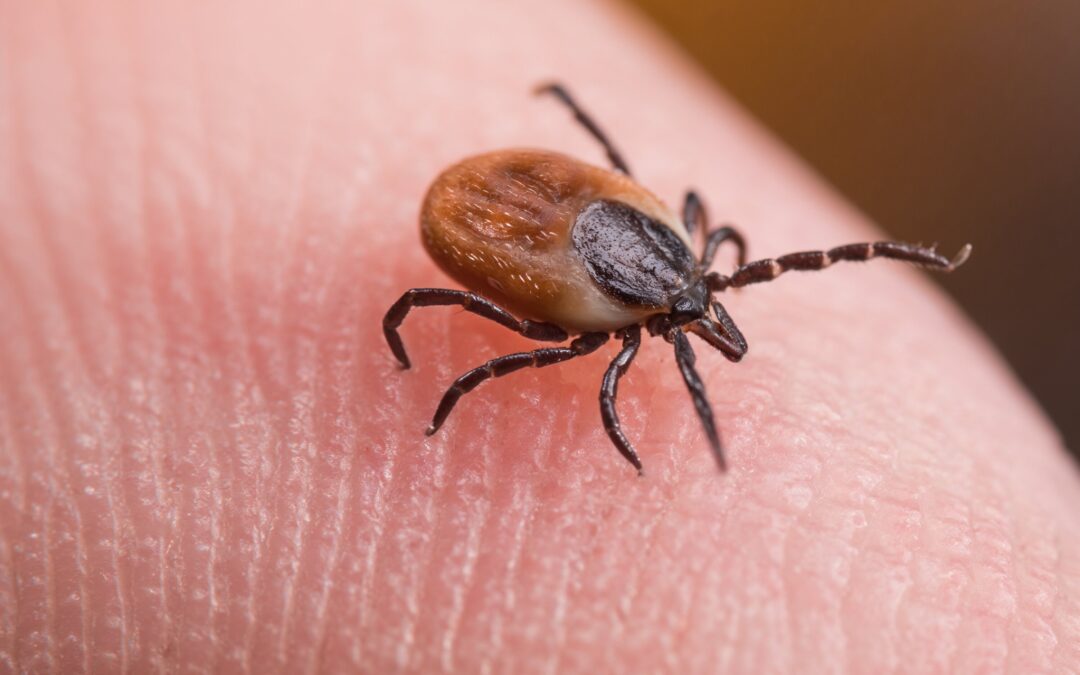
This month on our blog we’ve devoted an entire feature to one of the parasites that most worries anyone who walks their furry friend through fields, parks or even the backyard: ticks.
What Is a Tick?
At first glance they hardly look like much—just a few millimetres across when unfed, often mistaken for tiny dark specks in your pup’s coat—yet these arachnids of the order Ixodida (family Ixodidae or “hard ticks” and Argasidae or “soft ticks”) pose a real health risk to your four-legged companion. Their bodies are oval and flattened, ranging in colour from brown, about the size of a pinhead, to a bluish-grey hue resembling a pea once they’ve fed.

A tick’s life cycle goes through four stages—egg → larva (six legs) → nymph (eight legs, immature) → adult—with each stage feeding for a different duration. Larvae attach for only a few hours; nymphs for several days; adult females may stay latched on for up to a week to engorge before dropping off to lay eggs. Some species, like Boophilus microplus, complete all three moults on one host, but most dog-infesting ticks (for example Rhipicephalus sanguineus, the brown dog tick) follow a three-host cycle: larva, nymph and adult female feed on three different dogs, alternating blood meals with off-host moulting and egg-laying in the environment.
These arachnids lurk in low vegetation and damp spots—shrubs, grass, fallen logs or leaf litter—waiting at the edges of trails, parks or your garden. Their activity peaks from spring through early autumn (and all summer long), when temperature and humidity are ideal to complete their life cycle. That’s why a thorough check of every nook and cranny of your dog’s coat after each outing—ears, neck, underarms, groin, between the toes and at the base of the tail—is so important.
How Do Ticks Attach and How Can You Spot Them?
Ticks employ a remarkably effective anchoring mechanism. First they crawl across the skin hunting a thin, vascularised spot. With blade-like chelicerae they make tiny cuts, then drive in their hypostome—a barbed, root-like structure—as an anchor into the dermis. To cement their hold, they secrete a proteinaceous “glue” that hardens around their feeding tube. At the same time they inject saliva packed with anticoagulants, vasodilators, immunomodulators and even local anaesthetics, so blood flows freely and the bite goes virtually unnoticed. Over days of feeding, that same saliva may transmit bacteria (Borrelia, Ehrlichia, Anaplasma) or protozoa (Babesia) into your dog, causing serious illnesses if left untreated. Only once fully engorged does the tick release its grip, drop off to the ground and continue its life cycle.

Detecting a bite isn’t always easy, but watch for these signs: a dark, stationary speck in your dog’s coat may be a still-attached tick. When removed—or if it detaches on its own—you’ll often see a small red bump, sometimes crusted over, marking the site of irritation and minor haemorrhage. Your pup may scratch, lick or rub that area repeatedly; in sensitive or allergic dogs the reaction can be more intense, even causing localized hair loss. In heavy infestations—tens or hundreds of ticks feeding—the cumulative blood loss can lead to anaemia, lethargy, weight loss and a dull coat.
Symptoms After a Tick Bite
When a tick has fed too long or has left part of its mouthparts embedded, bacterial infections and allergic reactions can develop. Signs of infection include a warm, painful, swollen area around the bite, fever, loss of appetite, swollen lymph nodes or even small bleeding spots on the gums or nose. Ticks also carry opportunistic pathogens: Lyme disease (Borrelia burgdorferi) manifests as joint stiffness and pain, fatigue and fever; Babesiosis (Babesia canis) brings fever, anorexia, lethargy and dark-coloured urine and Ehrlichiosis (Ehrlichia canis) causes prolonged fever, weight loss and can affect clotting or breathing.
Treatment: Removing a Tick from Your Dog and Aftercare
Faced with these risks, proper removal makes all the difference. Use fine-pointed tweezers or a tick hook, grasping the body as close to the skin as possible, and pull straight out—perpendicular to the skin—without twisting or squeezing. Twisting or crushing the tick may inject more saliva or leave mouthparts behind. Some vets recommend applying a tick-killing spray first to immobilise the parasite. Once removed, disinfect the area with alcohol or povidone-iodine, save the tick in a sealed container in case it needs to be tested, and monitor the bite site for 48 hours. If redness, swelling or discharge persists, consult your veterinarian, who may prescribe a short course of antibiotics as a preventive measure.

Preventing Ticks on Your Dog
The best defense combines treatments on your dog and in its environment:
- On the dog:
- Collars with sustained-release actives form a protective barrier that repels and kills ticks for up to eight months.
- Spot-on pipettes placed between the shoulder blades spread through the skin’s lipid layer, eliminating ticks for one to two months.
- Oral tablets (isoxazolines) circulate in the bloodstream so that any tick that bites dies within 48 hours, offering one to three months of protection across the coat.
- At home: vacuum carpets, wash bedding in hot water and regularly ventilate and disinfect living areas to reduce larvae and nymphs.

- In the yard: keep grass trimmed, clear brush and create gravel or timber borders between wooded and lawn areas. In heavily infested zones you can apply acaricidal powders or sprays—always following veterinary and product instructions.
With this integrated approach—regular coat checks, correct removal technique, environmental control and a veterinary-guided prevention program—your dog can enjoy every outing with minimal risk of bringing home these silent, blood-thirsty hitchhikers.
Conclusion
Understanding how ticks live and feed—their life cycle, anticoagulant saliva and preferred hiding spots—is the key to keeping your furry friend safe. A careful removal, daily coat inspections and a combined preventive regimen (veterinary-recommended treatments plus home and garden hygiene) drastically reduce the chance of disease. And of course, consulting your veterinarian to choose the right product and schedule completes the plan. That way, every forest walk becomes a healthy, worry-free adventure for your four-legged companion.
Frequently Asked Questions
Does any treatment against tick-borne diseases in dogs work?
No—each pathogen (Borrelia, Ehrlichia, Anaplasma, Babesia…) requires its own specific protocol and medication. Only your veterinarian, armed with the right diagnostic tests and a clear history of the tick bite, can prescribe the exact treatment your furry friend needs to recover without complications.
Does any tick-prevention product suffice?
Prevention isn’t one-size-fits-all. The optimal format (collar, spot-on pipette, oral tablet or even environmental spray) and application schedule must be tailored to the tick species in your area, the season, your dog’s coat type and lifestyle. Veterinary advice is essential to ensure the chosen barrier works at 100%—keeping bites at bay without irritating your companion’s skin.
What’s the difference between fleas and ticks?
Fleas and ticks are very different parasites: ticks are eight-legged arachnids that anchor deeply in the dermis and can feed for days or weeks, transmitting bacteria or protozoa after several hours of attachment. Fleas, by contrast, are six-legged jumping insects that bite rapidly and repeatedly throughout the day, lay eggs in the environment, cause intense immediate itching and rarely stay in one spot—though they can also transmit tapeworms if your dog ingests one while scratching.


