
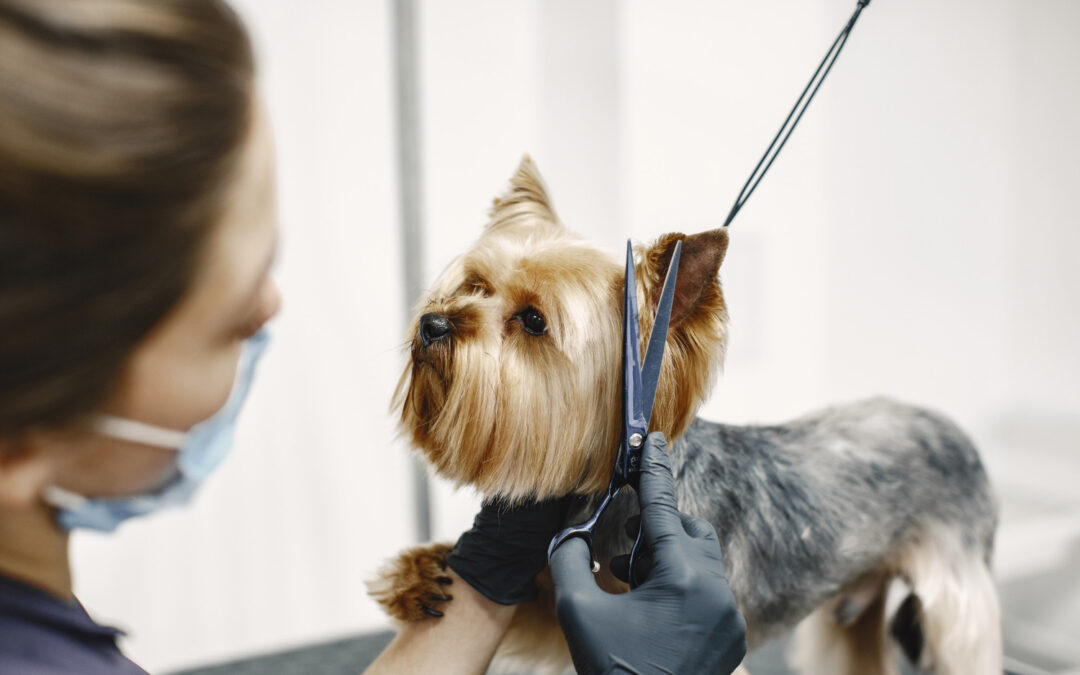
Summer arrives with high temperatures, and many pet owners ask themselves a recurring question: should I trim my furry friend’s hair to help them stay cool during the hot weather? Summer grooming—a set of grooming and hair-cutting practices specifically designed for the hot months—has become an increasingly popular trend in pet salons. This practice stems from the natural concern for the well-being of our beloved companions during high temperatures, seeking to reduce the amount of hair and its thermal load, facilitate their hygiene, and improve their overall comfort.

However, it’s essential to understand that our furry buddies’ coat isn’t simply a “piece of clothing” that can be modified without consequences. It’s a specialized biological system composed of guard hairs that repel water and an undercoat that provides bidirectional thermal insulation. The decision to implement summer grooming should be based on a solid understanding of the specific needs of each breed and coat type, to ensure that this practice truly benefits our four-legged friends rather than compromising their natural thermoregulation system.
IS IT GOOD TO TRIM DOGS’ HAIR FOR THERMOREGULATION?
Our beloved companions’ coat is much more than an aesthetic feature: it’s a natural air conditioning system that has evolved to keep them comfortable in both winter and summer. Unlike humans, who regulate our temperature primarily through sweating, our furry pals have developed a different and highly efficient mechanism based on the structure of their coat.
It’s composed of two specialized layers that work in perfect harmony: the guard hairs—those longer, stiffer, and shinier hairs that form the visible outer layer—act as a protective shield that reflects solar rays, repels water, and protects against external elements like dirt and insects. Underneath is the undercoat or subcoat—formed by short, soft, and dense hairs located close to the skin—that creates air chambers functioning as a bidirectional insulator: it maintains body heat when it’s cold and protects from external heat during summer.

ADVANTAGES AND DISADVANTAGES OF DOG HAIR TRIMMING IN SUMMER
Summer grooming can offer certain genuine benefits for our furry friends, especially when performed professionally and thoughtfully. For pets with extremely dense, matted coats prone to tangles and knots, a moderate trim can restore the natural ventilation capacity, allowing air to circulate again. Additionally, it facilitates daily hygiene and cleaning after their outdoor adventures, allowing for better detection of skin problems, external parasites like fleas and ticks, or any irregularity in the dog’s skin. It’s also true that during intense shedding periods, professional brushing or light hair trimming can help eliminate dead hair that could otherwise accumulate and reduce the natural thermoregulatory efficiency of the coat.

However, the risks of excessive summer grooming are considerable and can compromise our animals. By eliminating or drastically reducing the coat, we expose their skin to UV radiation, increasing the risk of sunburns, dermatitis, and even long-term skin cancer. Furthermore, by altering the natural insulation system, our furry friends may experience greater difficulty regulating their body temperature, resulting in paradoxical overheating. The coat also acts as a protective barrier against insects, environmental allergens, and micro-traumas, protections that are lost with excessive cutting. Finally, in breeds with double-layer coats, it’s not recommended to reduce hair length because it can permanently alter the structure and quality of the hair, compromising its natural regeneration capacity and affecting its long-term functionality.
GROOMING RECOMMENDATIONS ACCORDING TO HAIR TYPE AND DOG BREED
When we talk about our short-haired friends, like the adorable Boxers, Beagles, Bulldogs, Dalmatians, Rottweilers, Dobermans, Weimaraners, Vizslas, Basset Hounds, and Pointers, it’s important to understand that these furry buddies already possess a naturally efficient ventilation system. Their coat close to the skin allows optimal air circulation, so additional summer grooming is not only unnecessary but can be counterproductive by leaving it too short to protect against UV rays and external elements. Regular brushing 2-3 times per week with soft-bristle brushes or rubber gloves is sufficient to keep it healthy.

Medium-haired dogs, like Cocker Spaniels, Springer Spaniels, some Border Collies, Brittany Spaniels, certain Schnauzer lines, and Australian Shepherds in specific areas, represent a middle ground where moderate summer grooming can be beneficial if done carefully. A conservative trim that reduces approximately 25-30% of the length, always maintaining at least 2-3 centimeters of protection, can improve their comfort without compromising their thermoregulatory system. These adorable pets benefit from thinning to reduce density without significantly altering length, layered cuts that optimize ventilation, and daily brushing during summer especially during shedding periods.

For our long-haired companions, like the elegant Yorkshire Terriers, Maltese, Shih Tzus, Afghan Hounds, Irish Setters, long-haired Collies, Newfoundlands in certain areas, and some types of Spaniels, summer grooming can offer real benefits. They can benefit from aesthetic-functional trims that reduce volume without eliminating essential protection, always maintaining lengths of 4-6 centimeters that preserve their natural protective functions. Their care requires mandatory daily brushing to prevent mats that would compromise natural ventilation, use of specialized products like leave-in conditioners and detangling sprays, graduated cutting techniques with variable lengths according to body area, and professional reviews every 4-6 weeks to maintain the natural structure of the coat.

The adorable furry friends with curly coats, like Poodles in all their varieties (Toy, Miniature, and Standard), Bichón Frisé, Bichón Bolognese, Portuguese Water Dog, Kerry Blue Terriers, and Lagotto Romagnolos, represent a special case where summer grooming is not only appropriate but frequently necessary. Their unique curly structure can become a heat trap if not properly maintained, so cuts like the “puppy cut,” modified “continental clip,” or utility cuts can significantly improve their comfort during hot months, always maintaining at least 1-2 centimeters of length for basic protection. These companions require brushing every 2-3 days with specific tools for curls, professional cuts every 4-6 weeks during summer, clarifying shampoos that don’t mat the curl, and specialized drying techniques with diffusers that preserve the natural structure of their adorable curls.

In the case of dogs with hard or wire hair, like Wire Fox Terriers, Airedales, Schnauzers in all their varieties, Scottish Terriers, West Highland White Terriers, German Wirehaired Pointers, and Wirehaired Pointing Griffons, handling must be especially careful. These companions benefit more from “hand stripping”—a specialized technique that selectively removes excess dead hair every 8-12 weeks—than from conventional cuts, as this preserves the waterproof properties and natural texture of their coat. Weekly brushing with specific tools for hard hair, special attention to problematic areas like beard and eyebrows, and for companion animals, modified clipping complete their care regimen.

Finally, for our majestic friends with double-layer coats, like Siberian Huskies, Alaskan Malamutes, German Shepherds, Belgian Shepherds, Golden Retrievers, Labrador Retrievers, Chow Chows, different types of Spitz, Border Collies, Australian Cattle Dogs, and Keeshonds, there’s a categorical recommendation: completely avoid drastic summer grooming. These furry buddies possess the most sophisticated thermoregulatory system in the canine kingdom, and altering their structure can cause permanent damage. Instead of cuts, these companions benefit enormously from intensive professional de-shedding with specialized tools like FURminators and undercoat rakes, daily brushing sessions of 15-20 minutes during shedding with quality pin brushes, monthly baths with specific shampoos to eliminate dead hair, and professional reviews every 6-8 weeks for deep de-shedding.

GENERAL TIPS TO KEEP YOUR DOG COOL
Keeping our beloved companions comfortable during summer goes far beyond simple hair cutting; it requires a comprehensive approach that respects their natural physiology while optimizing their well-being.
- Regular brushing eliminates fallen hair that can obstruct natural ventilation, stimulates skin circulation, and distributes natural oils that keep their coat healthy.
- Adequate hydration is fundamental. We must ensure constant access to fresh water.
- Quality nutrition, rich in omega-3 and omega-6 fatty acids, biotin, and high biological value proteins, strengthens hair health from within, optimizing their natural protective capacity.
- Summer baths also require special consideration: moderate frequency every 2-4 weeks, use of specific shampoos that don’t excessively dry the skin, and complete drying that avoids moisture retention in the undercoat.
- Environmental management with shaded areas with good air circulation, avoiding hot surfaces like asphalt, and cool indoor spaces allow them to naturally self-regulate their temperature.

- For those furry friends who have received grooming or have naturally short coats, applying specific sunscreens for animals in vulnerable areas like the nasal bridge, ear tips, and ventral area becomes essential to prevent sunburns and long-term skin damage.
ESSENTIAL PRECAUTIONS WHEN CUTTING YOUR PET’S HAIR DURING SUMMER
Constant vigilance for signs of thermal stress in our beloved companions is fundamental, especially because those who have received excessive grooming may present greater susceptibility to heat-related problems.
- Excessive panting disproportionate to activity level, abundant salivation, lethargy alternating with extreme restlessness, and signs of vomiting or diarrhea should alert us to seek a cool environment and contact veterinary professionals.
- It’s crucial to understand that certain breeds require special precautions: our adorable brachycephalic companions like Bulldogs, Pugs, and Boxers, senior furry friends, those who are overweight, or those suffering from cardiorespiratory conditions.
- Sun protection becomes critical for light-colored dogs or those who have received cuts, as their exposed skin is especially vulnerable to ultraviolet radiation, potentially developing from immediate burns to chronic dermatological problems.
- External parasite control gains renewed importance during summer, when fleas, ticks, and mosquitoes are more active. Paradoxically, while short coats facilitate visual detection of these unwelcome visitors, they also eliminate part of the natural physical barrier that makes their initial establishment difficult.
The combination of proactive vigilance, appropriate coat care according to its specific type, and intelligent environmental management ensures that our furry friends not only survive but thrive during the challenging summer months.
CONCLUSION: IS IT GOOD TO CUT DOGS’ HAIR IN SUMMER?
Summer care requires much more than just reducing your dog’s hair length. Each coat type has specific needs. The key is understanding and respecting the thermoregulation system that nature has perfected over thousands of years in our canine companions.

Intelligent summer grooming isn’t about following trends or seeking quick solutions, but about making informed decisions based on the individual needs of each furry friend. Whatever the method, our goal should always be to support our pets’ natural mechanisms rather than replace them. Love for our four-legged friends is demonstrated through decisions that prioritize their well-being and comfort, ensuring they enjoy a safe, comfortable, and healthy summer by our side.
FREQUENTLY ASKED QUESTIONS
Is it recommended to completely shave my dog’s hair in summer?
It’s not recommended to completely shave dogs, as it eliminates their natural protection and thermoregulation system. Dogs’ hair also acts as a bidirectional insulator, protecting from both heat and cold, in addition to preventing burns on their skin. Instead of shaving, it’s better to opt for regular brushing and moderate trims according to the dog’s coat type.
Does coat color influence how cool my dog stays?
Yes, hair color influences thermal absorption. Dark-colored coats absorb more solar radiation and heat up faster, while light ones better reflect solar rays. However, dogs have developed natural adaptations according to their color, and grooming should be based more on your dog’s coat type than on its color.
Can I do summer grooming at home or should I go to a veterinary clinic or pet salon?
Regular brushing and basic maintenance can be done at home with adequate tools. However, for specific cuts, techniques like hand stripping, or breeds with special coats (double layer, curly), it’s recommended to go to a pet salon professional, specialized in canine grooming who understands the specific needs for your dog’s hair type.


