Introduction
Veterinary medicine is at a transitional point where the health of each canine is treated as a public health priority. Having a vaccination schedule for dogs is not only a clinical recommendation, but an essential vaccination to mitigate the spread of serious and contagious diseases in urban and rural environments.
In this context, this year’s vaccination schedule integrates the latest advances in immunology to comprehensively protect your pet.
Types of Vaccines for Dogs: Puppy Immunity
To understand the vaccination plan, we must understand that each puppy acquires passive immunity through the mother’s colostrum, but by 6 to 8 weeks of life, maternal antibodies decrease dramatically. This is the point where vaccination is recommended to initiate active immunity in the animal.
The veterinarian must evaluate the type of vaccine to use, ensuring that vaccines help strengthen the immune system without unnecessary risks. There are several types of vaccines for dogs:
- Inactivated (or Dead) Vaccines: They contain whole, inactivated, and antigenically complete microorganisms that cannot infect or replicate, but can stimulate an immune response. Because they do not mimic a natural infection, they generally produce weaker immune responses, which is why they require an initial dose and additional doses; the first to prepare the immune response and the second, generally, provides the protective immune response. Although there are very potent ones, such as the rabies vaccine with dead virus, which uses only one dose.
- Live Modified or Live Attenuated Vaccines: They contain whole live but attenuated (that is, weakened) viruses or bacterial organisms that can infect cells and replicate within them, establishing a transitory, low-level infection that generates a strong immune response without causing a manifest infection. They usually require fewer doses to achieve a strong, constant, and lasting immune response.
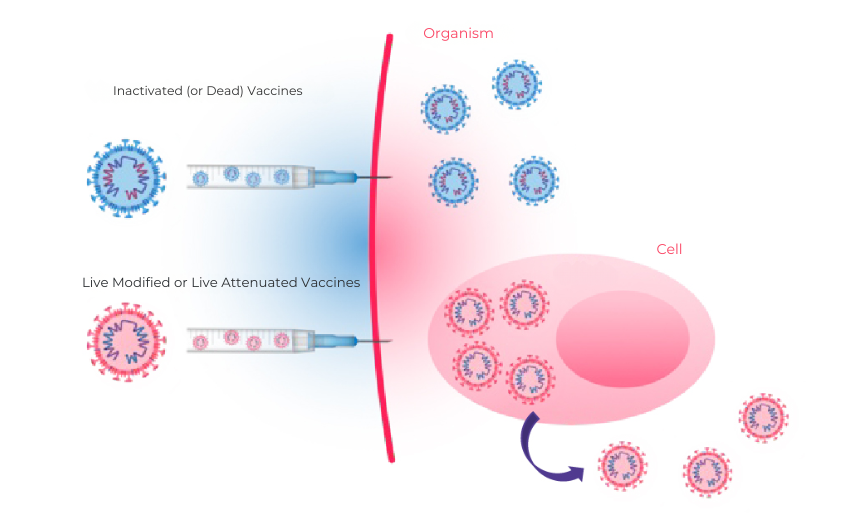
- Subunit or Recombinant Vaccines: They consist of antigenic subcomponents of pathogenic microorganisms that have been extracted and purified from cultures or have been synthesized using recombinant DNA technology. During manufacturing, the recombinant genome is used to produce live parvovirus that can infect cells and multiply in vaccinated puppies, just like a conventionally manufactured live attenuated vaccine. They tend to be less immunogenic than modified live vaccines.
Additionally, when we talk about trivalent dog vaccines, polyvalent vaccines, etc., we are referring, specifically, to the number of antigens or strains of different microorganisms (called “valencies”) that a single injection contains. In the context of canine vaccines, this allows protecting the pet against several diseases simultaneously with a single shot.
Then the veterinarian will decide how many vaccines your companion needs based on their lifestyle and geographic area.
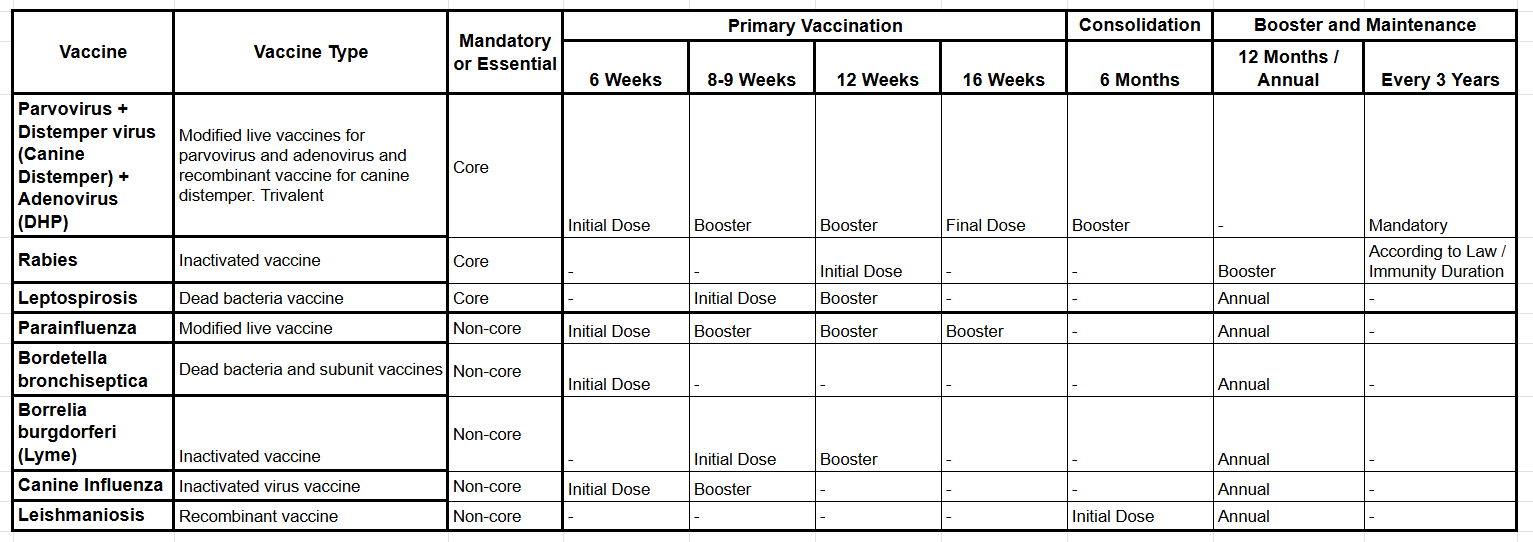
Dog Vaccination Schedule: From Puppies to Adult Dogs for 2026
The vaccination schedule is based on the vaccination guidelines for dogs and cats of the international organization WSAVA (World Small Animal Veterinary Association).
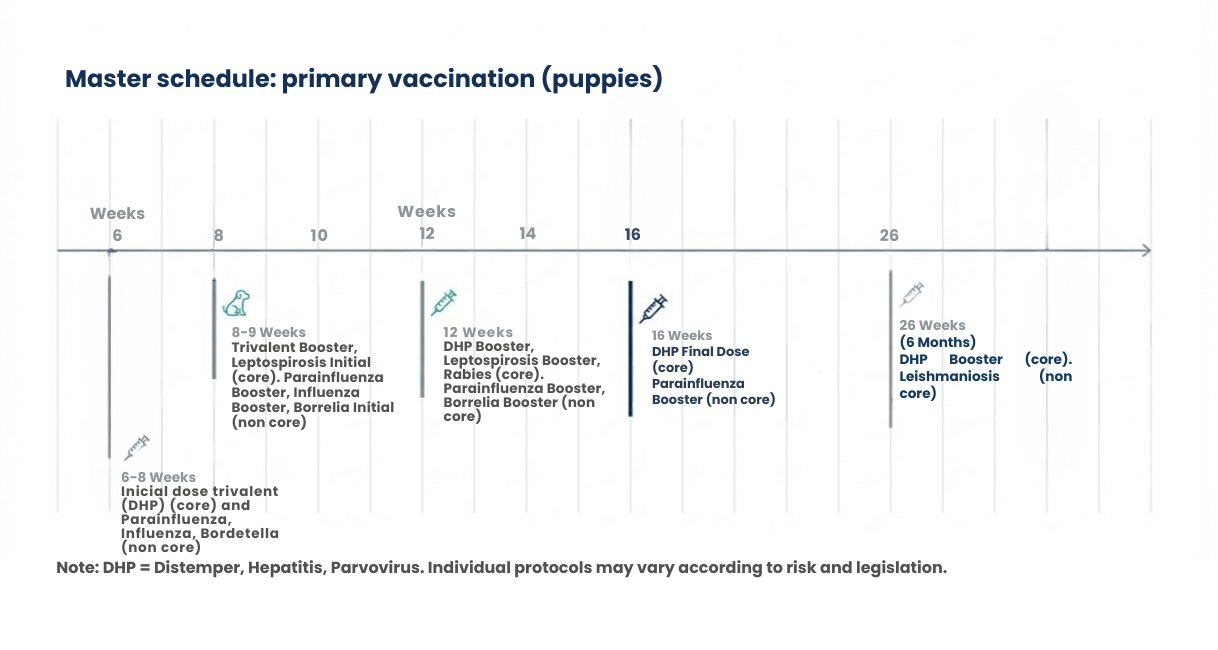
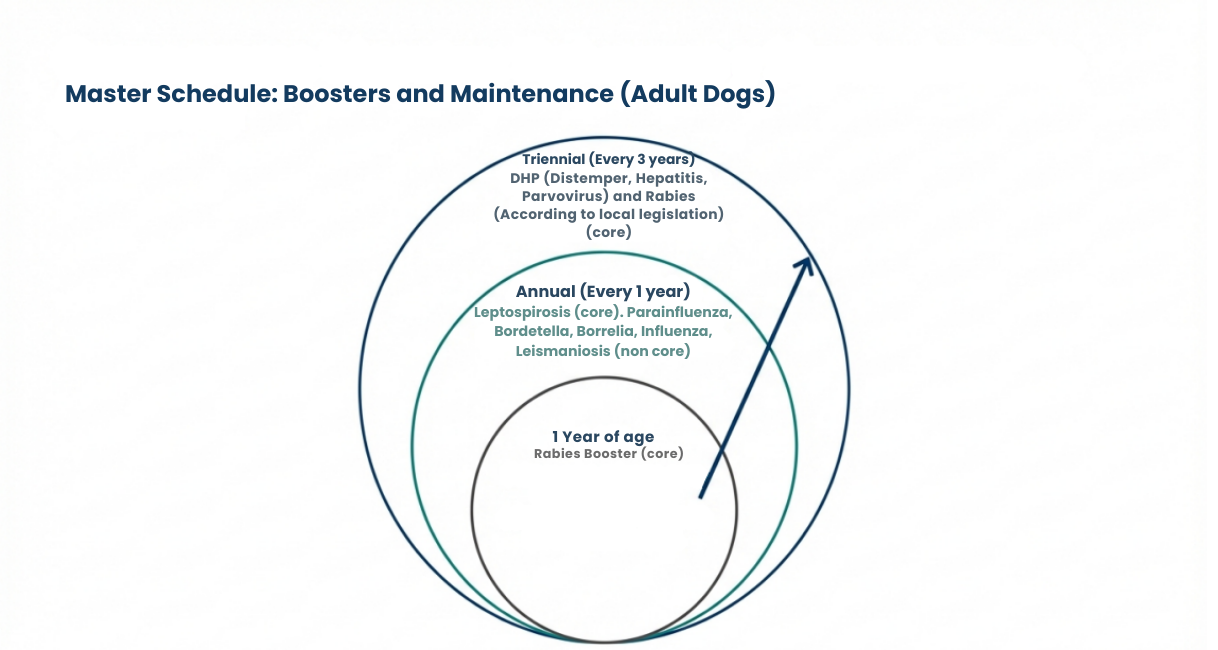
What Vaccines Are Mandatory for Dogs and What Essential Vaccines Protect Your Pet?
In Spain, regulations on which vaccines are mandatory vary significantly, as animal health competencies are transferred to each autonomous community. Rabies vaccination is the only one that has mandatory character by law in the vaccination schedule in the vast majority of national territory due to its zoonotic risk (transmission to humans).
- Communities where it is mandatory: Madrid, Andalusia, Castilla-La Mancha, and the Valencian Community with annual booster. Navarre with an interval of 2 years between vaccinations. Extremadura and Cantabria follow the times according to the product information. It is also mandatory in Aragon, Asturias, Balearic Islands, Canary Islands, Castilla and León, La Rioja, Murcia, Basque Country, Ceuta, and Melilla.
- Communities where it is recommended (but not mandatory): As of February 2026, it remains voluntary in Catalonia and Galicia.
On the other hand, there are essential vaccines that, despite not being mandatory vaccines for dogs and not required by law, must be administered for the protection of both pets and humans. This is the case with Parvovirus, Adenovirus, and Distemper. This is recognized by the WSAVA.
| Parvovirus Virus | Adenoviridae, family of Adenovirus Virus | Distemper Virus |
However, the 7/ 2023 Animal Welfare Law (Title II, Chapter I, Article 24, 2. e)) requires owners to keep their animals in optimal sanitary conditions and provide them with veterinary care, which implies following these essential recommendations.
Finally, optional/non-mandatory vaccines are generally those considered as preventive treatments to reduce disease severity or as additional tools for dogs that may be exposed. They should be administered annually to provide reliable protection. This group includes vaccines for Parainfluenza and Bordetella bronchiseptica for Kennel Cough in parks and kennels, Borrelia burgdorferi related to Lyme Disease (transmitted by ticks in wooded areas), and Leishmaniasis.
| Paramyxoviridae, family of Virus Parainfluenza | Bordetella bronchiseptica | Borrelia burgdorferi | Leishmaniasis Protozoo |
In addition to vaccination, some communities require preventive treatments against parasites such as Hydatidosis (Echinococcosis). Internal periodic deworming is mandatory in Castilla-La Mancha (annually), Andalusia (annually), Castilla and León (minimum every 6 months), and the Valencian Community.
Side Effects of Vaccines in Dogs
Adverse events are undesired harmful consequences that follow vaccine administration (including lack of protection). They include local reactions such as pain and swelling at the injection site, behaviors such as lethargy or apathy, or symptoms such as mild fever and/or decreased appetite or digestive disorders (diarrhea and vomiting), and in severe cases, any hypersensitivity reaction (allergy), illness, injury, or apparent toxic effect.
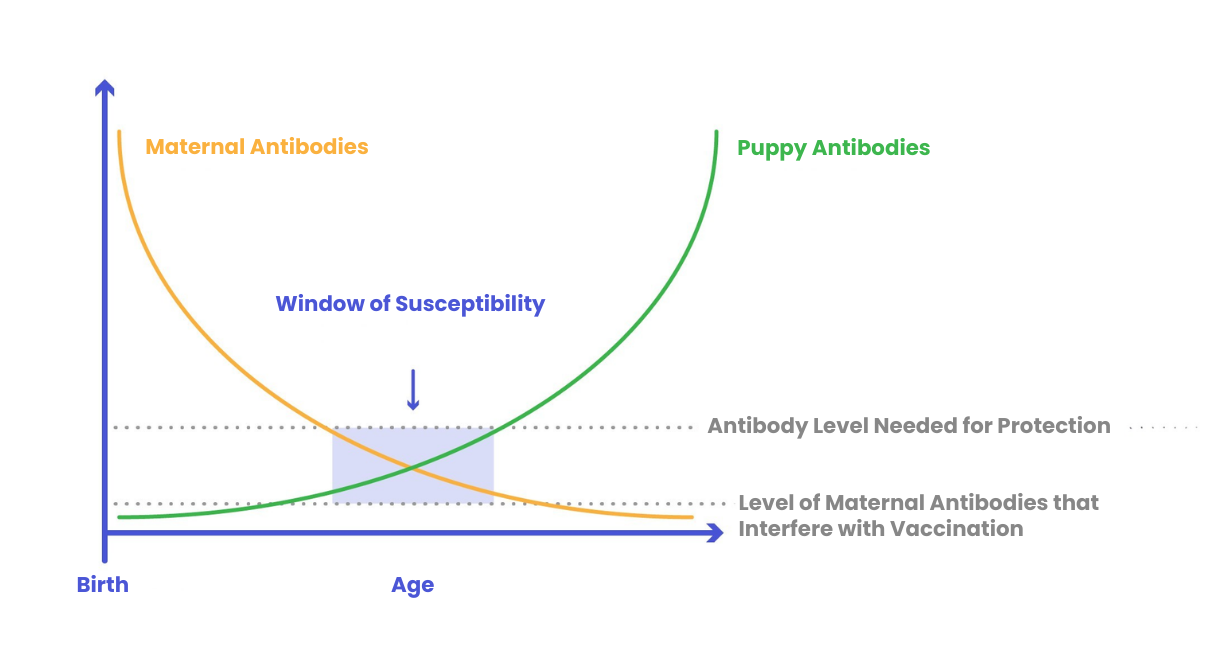
The lack of expected vaccine efficacy is an adverse event and can occur in young animals due to interference from colostral antibodies transferred by the mother with the active immune response against vaccine antigens.
However, there are other important causes such as poor vaccine management: reconstitution, storage, homogenization, among others.
The owner should monitor their companion after vaccination for these effects; however, the benefits of puppy vaccines protecting against serious clinical conditions far outweigh these minor risks.
Conclusion: Benefits of the Vaccination Schedule in Dogs
Canine vaccination is the foundation of responsible pet ownership that cares for your pet and the community. Keeping up to date with the vaccination schedule for large dogs and puppies protects your dog against serious and transmissible diseases that can be fatal to your furry companion.
Knowing when to vaccinate your dog, how many doses and boosters it needs, and understanding that these help prevent health problems ensures a healthy future. Remember, following the complete guide from your trusted veterinary clinic is, from the first vaccine dose, the path toward a complete immune response.
Frequently Asked Questions
What is the Canine Window of Susceptibility?
The “window of susceptibility” is the period in which antibodies transferred from the mother are insufficient to provide complete immunological protection, but still sufficient to interfere with an active immune response.
During this “window,” a puppy or kitten cannot be immunized with conventional vaccines, but is susceptible to diseases if it comes into contact with a “street” or virulent pathogen. Therefore, the initial basic vaccination series usually involves the administration of multiple and sequential doses.
What Symptoms Can the Different Viruses and Bacteria that the Vaccination Plan Fights Generate?
The mandatory vaccines for dogs in Spain and the additional vaccines prevent the following viruses and bacteria that present the symptoms described:
- Parvovirus: causes severe hemorrhagic diarrhea, thus severely affecting the intestines of puppies.
- Distemper virus (Canine Distemper): affects the nervous and respiratory systems irreversibly. It can also affect the digestive tract and is highly contagious.
- Adenovirus: is related to infectious canine hepatitis and causes acute liver damage. It is transmitted through feces, urine, or saliva through contact with other infected dogs.
- Rabies: affects the nervous system. It begins with behavioral changes, followed by nervousness, excessive salivation, and difficulty swallowing. Finally, paralysis occurs in the jaw and tongue or convulsions, among others.
- Leptospirosis: is a bacterium that causes vomiting, diarrhea, muscle pain, and fever and is usually transmitted through water.
- Parainfluenza and Bordetella bronchiseptica: known as Kennel Cough and causes respiratory system disorders such as dry cough and retching or nausea in dogs that frequent parks and kennels.
- Borrelia burgdorferi (Lyme): is transmitted by ticks and is characterized by difficulty in detection causing recurrent lameness and general signs such as fever, lethargy, loss of appetite, among others.
- Canine Influenza: presents symptoms similar to human flu such as cough, nasal discharge, fever, apathy, etc.
- Leishmaniasis: is a parasitic disease that generates cutaneous symptoms such as alopecia or baldness around the eyes, ears, and nose, skin scaling and ulcers, as well as organic signs such as weight loss or muscle atrophy.
Why Can’t the Puppy Go Outside Before the First Vaccine?
The main reason why a puppy should not roam freely on the street during its first weeks of life is that its immunity is still very limited and its immune system is immature.
During the first months of age, the animal is exposed to serious and contagious diseases such as parvovirus and distemper, which have extremely high mortality rates in young animals.
These viruses, for example, have high environmental resistance and can remain for months both on soil and in parks under adverse conditions.
Therefore, even though the first dose of the first vaccine is usually given at 8 weeks, real protection is neither immediate nor complete with a single injection. Vaccines help generate defenses progressively, and complete immunity is not guaranteed until about 10-14 days after the last dose of the initial protocol has been administered, which usually occurs around 16 weeks (4 months).